Driveways Built to Handle Clay Movement
Concrete Driveways in Fort Worth for residential properties experiencing seasonal cracking and subbase failure
H Generation Concrete installs, repairs, and replaces concrete driveways across Fort Worth and the surrounding Metroplex with a focus on subbase preparation that addresses how North Texas clay behaves through seasonal changes. Fort Worth clay soil expands when wet and contracts during dry months, creating pressure that undermines driveways poured over inadequate subbase compaction. You'll see the difference in wide-lot installations across Benbrook and Crowley, where proper depth and compaction prevent the mid-panel cracking that shows up within two summers on poorly prepped surfaces.
The work starts below the surface, with subbase compaction depth and mix design selected specifically for Metroplex clay movement rather than applying a standard spec regardless of soil type. Clay soil doesn't behave like stable sand or gravel base, so the approach adjusts compaction depth, moisture conditioning, and mix water content to account for the expansion and contraction cycles that define this region's soil profile.
Schedule a property evaluation to assess your current driveway condition and subgrade requirements.
What Proper Subbase Compaction Prevents Long-Term
Subbase compaction depth determines whether your driveway settles evenly or develops low spots and cracks where the clay beneath shifts unevenly. The process involves excavating to the correct depth, conditioning the clay subgrade for moisture stability, and compacting base material in lifts that create a stable platform before any concrete gets poured. Mix design then factors in the local caliche and clay content to control shrinkage and bonding.
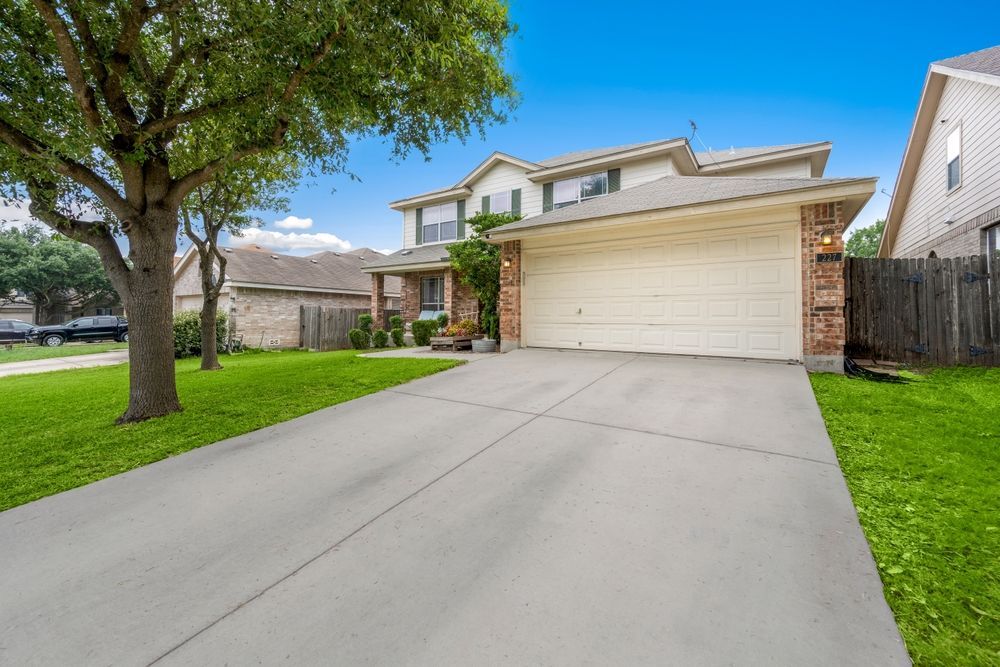
After the pour and cure cycle, you'll notice a surface that drains consistently without pooling in corners or along edges where settling typically begins. The driveway remains level across its width, and control joints placed according to panel size limits keep expansion movement predictable rather than allowing random cracking to develop mid-slab. Tire tracks no longer sink into soft spots during wet months, and the surface holds its grade through summer heat and winter freeze cycles.
H Generation Concrete operates throughout the Metroplex with site-specific subgrade prep based on actual soil conditions rather than a one-size approach. The difference shows in how the driveway performs five or ten years out, not just in the first season after installation.
What Homeowners Ask About Driveway Installations
Driveway projects in Fort Worth come with questions about timing, soil conditions, and how the work differs from standard flatwork. These answers address the factors that affect how long your driveway lasts and what you should expect during the process.
What makes Fort Worth clay soil different from other regions when pouring a driveway?
Fort Worth sits on expansive clay that swells with moisture and shrinks during dry periods, creating vertical and lateral pressure that standard subbase prep doesn't account for. Compaction depth and moisture conditioning adjust for this movement so the driveway doesn't crack as the soil cycles through seasonal changes.
How long does a concrete driveway need to cure before you can drive on it?
Concrete reaches sufficient strength for vehicle traffic within seven days under typical conditions, but full cure continues for weeks. You'll avoid surface damage by keeping heavy loads off during the first week and avoiding sharp turns or concentrated weight during the second week.
What's included in subbase preparation for a driveway installation?
Subbase prep involves excavating to the specified depth, grading for drainage, compacting the clay subgrade, and adding base material in compacted lifts. The depth and compaction effort increase in areas where clay content is higher or where the existing grade shows signs of past movement.
Why do some driveways crack within the first two years while others last decades?
Cracking within the first two years typically traces back to insufficient subbase compaction or failure to account for clay expansion and contraction. Driveways that last decades start with adequate compaction depth and mix design that matches the soil conditions rather than using a generic mix regardless of the site.
When should I replace a driveway instead of repairing surface cracks?
Replacement makes sense when cracking extends through the slab depth, when the surface has settled unevenly creating drainage problems, or when multiple panels show structural failure. Surface cracks that haven't caused settlement or drainage issues can often be addressed without full replacement.
H Generation Concrete operates across the Fort Worth Metroplex with a soil-aware approach to driveway construction that accounts for North Texas clay and caliche conditions. Request a detailed estimate based on your property's soil profile and current driveway layout.