Sidewalks Designed for Clay and Root Movement
Concrete Sidewalks in Fort Worth for residential properties dealing with buckled panels and tree root intrusion
Tree root intrusion and clay heave along older Fort Worth streets buckle sidewalks quickly when joint placement and panel depth don't account for the forces acting on the concrete. Neighborhoods like Wedgwood and North Fort Worth with mature tree lines see this constantly, where roots push panels upward or clay expansion creates uneven surfaces that become trip hazards. H Generation Concrete replaces and installs residential sidewalks across the Fort Worth metro using engineered joint and depth specs designed to absorb clay movement rather than crack mid-panel, with root barrier awareness applied in areas where tree growth predictably affects the flatwork.
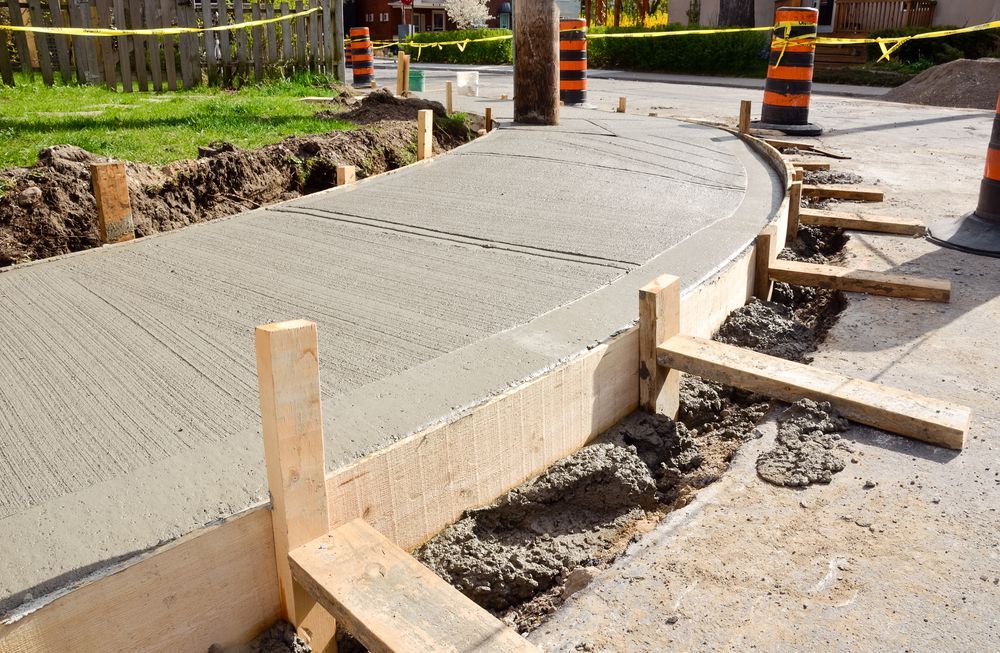
The process begins with diagnosing why the existing sidewalk failed—whether from root pressure, clay heave, or inadequate thickness—before removing the damaged sections and addressing the underlying cause. Joint placement divides the sidewalk into panels sized to allow controlled expansion and contraction, and depth specifications increase in areas where soil movement or root growth exerts more force. Root barriers install along tree lines where necessary to redirect growth away from the new concrete.
Request a detailed estimate based on your current sidewalk condition and site-specific challenges.
What Engineered Joint Placement Actually Accomplishes
Joint placement controls where the concrete moves as clay soil expands and contracts beneath it, preventing random cracking and keeping movement predictable. Joints cut or formed into the concrete at specific intervals allow each panel to shift slightly without transferring stress to adjacent panels, so seasonal clay movement doesn't cause the entire sidewalk to buckle or crack. Panel depth increases where tree roots or heavy clay content create additional pressure, giving the concrete enough mass to resist lifting forces without relying solely on subgrade stability.
After installation, you'll notice a sidewalk that remains level across its length without developing the raised edges or sunken sections that create tripping hazards. Water drains off the surface consistently instead of pooling where panels have tilted, and the joints remain tight rather than widening into gaps that collect debris. In neighborhoods with mature trees, the sidewalk stays in place rather than lifting as roots grow, because the depth and barrier placement accounted for root direction and growth rate during planning.
Replacement projects in areas with known soil or root issues include subgrade correction before the pour, so the new sidewalk doesn't repeat the failure pattern of the old one. This might involve additional excavation, moisture conditioning of the clay base, or strategic root pruning coordinated with the property owner to protect tree health while preventing future sidewalk damage.
Common Questions About This Service
Sidewalk replacement in Fort Worth involves more than removing old concrete and pouring new panels. These questions address the factors that determine how long the replacement lasts and what preparation makes sense for your specific site conditions.
What causes sidewalks to buckle in neighborhoods with mature trees?
Tree roots grow toward moisture and oxygen, often spreading horizontally beneath sidewalks where soil stays cooler and retains more water. As roots expand, they exert upward pressure that lifts concrete panels, especially where the sidewalk wasn't poured deep enough to resist that force or where no root barrier redirects growth away from the concrete.
How deep should a residential sidewalk be to handle Fort Worth clay movement?
Standard sidewalk depth runs four inches, but areas with heavy clay or tree root pressure benefit from increased depth to five or six inches. The additional mass resists lifting and cracking forces better than thinner panels, particularly where seasonal clay expansion creates vertical pressure beneath the concrete.
Why do some sidewalk panels crack while others next to them stay intact?
Cracking often occurs where joint spacing is too wide, forcing the concrete to absorb expansion stress mid-panel instead of at a control joint. Panels also crack where subgrade prep varies—one section might sit on well-compacted base while the adjacent section settles into poorly compacted soil, creating differential movement that fractures the concrete.
What's involved in removing and replacing a buckled sidewalk section?
Removal includes cutting out the damaged panels, excavating to assess subgrade condition and root intrusion, addressing the underlying cause by adding compacted base or installing root barriers, and pouring new panels with joint placement and depth matched to the site conditions. The process takes longer than a simple pour because it corrects the reason for failure.
Do sidewalks in Fort Worth require permits or inspections?
Permit requirements depend on the city and the scope of work, with some municipalities requiring permits for new sidewalks or replacements that alter drainage patterns. H Generation Concrete handles permit coordination where required, ensuring the work meets local code and inspection standards.
H Generation Concrete operates across Wedgwood, North Fort Worth, and the broader Metroplex with local knowledge of streetscape conditions and soil behavior. Arrange an on-site consultation to review your sidewalk challenges and discuss the preparation approach that fits your property.