
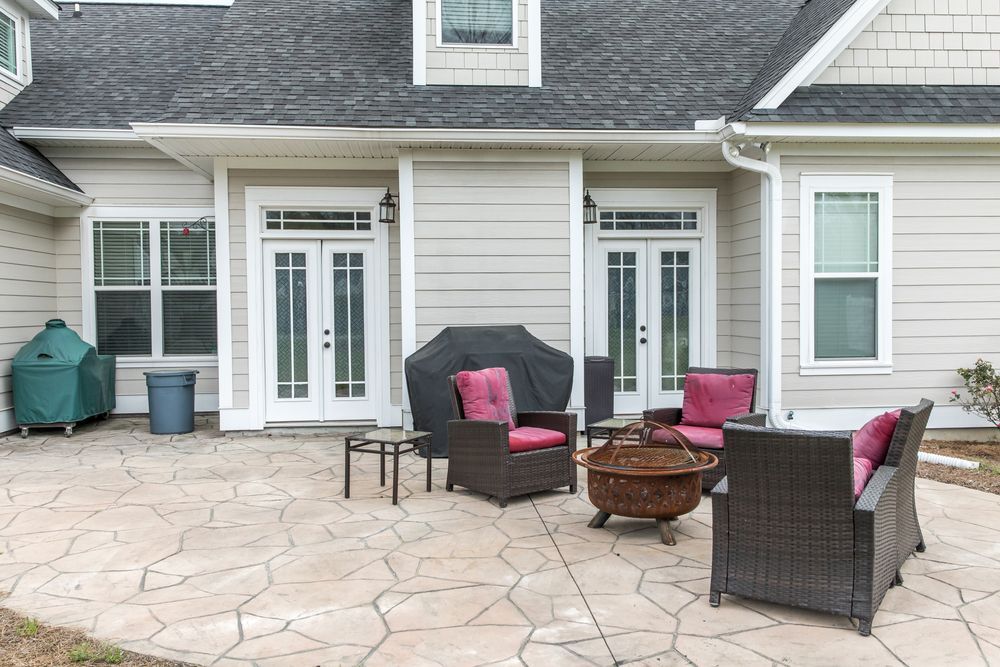
Outdoor Surfaces That Handle Texas Heat
Concrete Patios in Fort Worth for outdoor living spaces exposed to intense summer UV and temperature swings
Intense DFW summers crack and fade outdoor patio surfaces when finish thickness and UV-resistant sealing don't match the sun exposure and heat cycles your property experiences. H Generation Concrete installs concrete patios across Fort Worth and surrounding Metroplex communities with surface finish selection matched to how the space will be used and how much direct sunlight it receives during peak months. Homeowners in Keller and Southlake upgrading outdoor living areas find that finish type—whether broom, exposed aggregate, or sealed smooth—affects slip safety, heat retention, and how well the surface holds up under Texas UV exposure.
The work involves more than pouring a slab; it includes selecting aggregate size, finish texture, and sealant type based on whether the patio sits in full sun or partial shade, whether it connects to a pool deck, and whether slip resistance matters more than smooth texture. Broom finishes provide traction but retain more heat, while exposed aggregate stays cooler underfoot but requires more maintenance to keep the surface clean.
Arrange an on-site consultation to review your outdoor space layout and sun exposure patterns.
How Surface Finish Selection Addresses Texas UV Exposure
Surface finish determines how quickly the patio heats up in direct sun, how it handles foot traffic when wet, and how the color holds over time. Sealed smooth finishes reflect more light and clean easily but become slippery when wet. Exposed aggregate exposes the stone within the mix, creating texture that reduces heat buildup and provides traction without the rough feel of a heavy broom finish. Finish selection happens before the pour, not after, because it dictates mix design and timing during the finishing window.
Once the patio cures and the sealant sets, you'll notice a surface that stays cooler underfoot during afternoon heat and doesn't develop the surface crazing that shows up on patios poured without climate consideration. Water sheds evenly toward drainage points rather than pooling in low spots, and the color remains consistent across the surface instead of fading in high-exposure zones. The texture you chose during planning remains stable, so slip resistance doesn't degrade as the surface weathers.
Finish options extend to color release and stamping if the design calls for a decorative look, but durability under Texas sun and heat remains the primary selection criteria. Resealing schedules depend on finish type and exposure level, typically ranging from two to five years depending on use and weather patterns.
Questions Before Starting Your Patio Project
Patio installations across the Metroplex raise questions about finish durability, timeline, and how the surface will perform in the specific conditions your property presents. These answers clarify what affects project planning and outcome.
What finish type works better for patios in full sun versus partial shade?
Full sun patios benefit from exposed aggregate or lighter-colored sealed finishes that reflect heat rather than absorbing it, while shaded patios can use darker colors and smoother finishes without becoming uncomfortably hot. Texture choice also affects how quickly the surface dries after rain in shaded areas.
How long after pouring can you walk on a new concrete patio?
You can walk on the surface within 24 to 48 hours once initial curing hardens the top layer, but furniture placement and full use should wait until the seven-day mark when the concrete reaches sufficient strength to handle concentrated weight without surface damage.
Why do some patios develop surface cracks while others stay smooth for years?
Surface cracking typically results from inadequate subbase prep, insufficient control joint placement, or pouring during temperature extremes that cause rapid moisture loss. Patios that stay smooth start with proper subgrade compaction, appropriate joint spacing for panel size, and curing methods that control moisture evaporation during the first week.
What's the difference between a broom finish and exposed aggregate for outdoor patios?
A broom finish drags a stiff broom across wet concrete to create linear texture, providing traction with minimal cost but retaining more heat. Exposed aggregate removes the top cement layer to reveal the stone within the mix, creating a cooler, more decorative surface that requires more labor and material cost upfront.
Do patios in Fort Worth require different preparation than patios in other regions?
Fort Worth clay soil requires deeper subbase compaction and moisture conditioning compared to regions with stable sand or gravel base. The seasonal expansion and contraction cycle here means the subgrade prep directly affects whether the patio develops settlement cracks or remains level through multiple years of use.
H Generation Concrete serves Keller, Southlake, and the broader Metroplex for patio installations matched to Texas UV exposure and outdoor lifestyle needs. Schedule a property evaluation to discuss finish options and project specifics for your outdoor space.